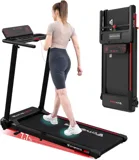
Treadmill for weight loss: a realistic method
A treadmill helps you lose weight, but not the way adverts promise. Here is how much a session really burns, why consistency matters more than intensity, and how to build a plan that lasts.
Contents
Good to know: weight loss depends on many factors, including diet, sleep, medication and health. If you have a lot of weight to lose, a chronic illness or ongoing treatment, talk to your doctor before you start.
What a treadmill can, and cannot, do
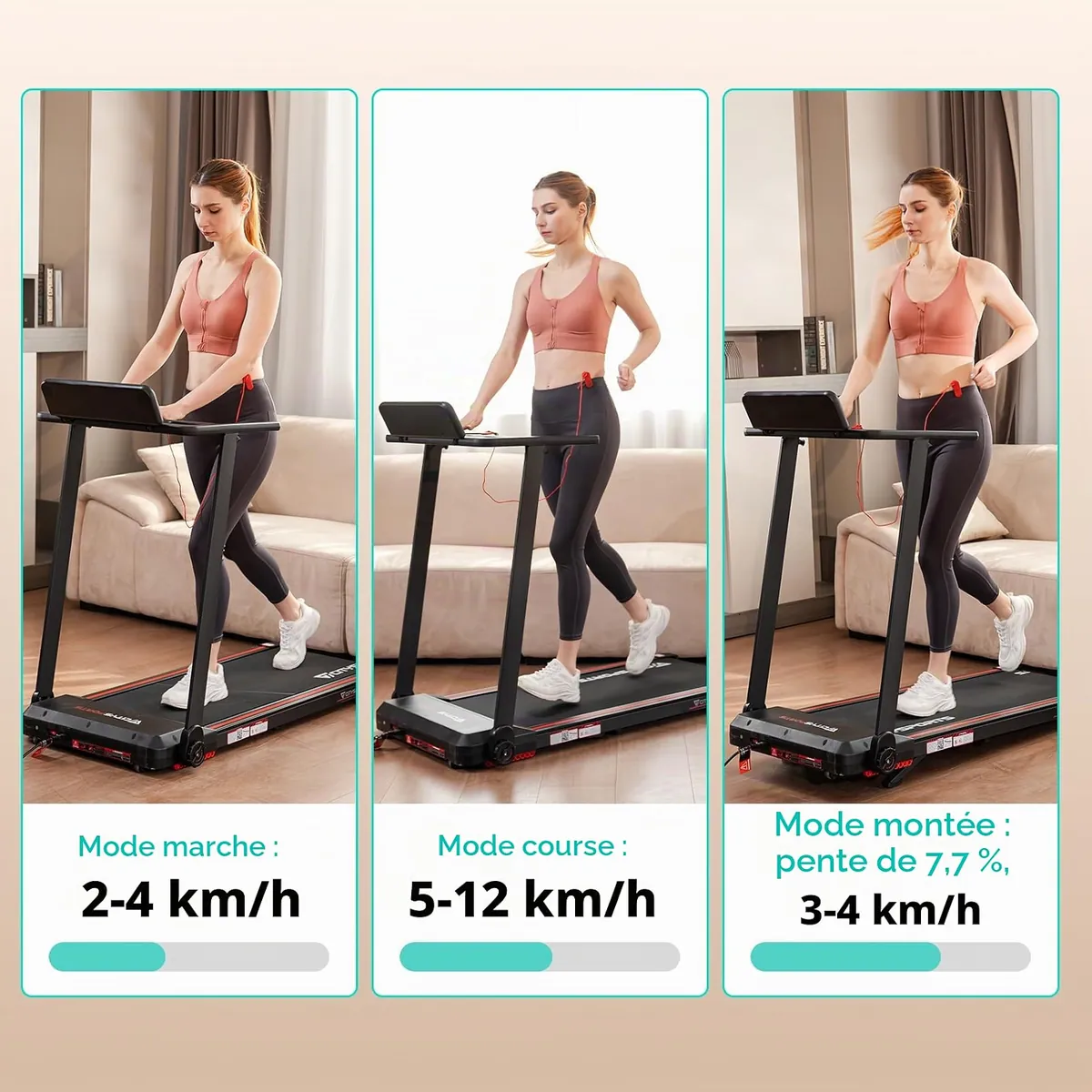
A treadmill does not melt fat from a particular area, does not “boost” your metabolism for days and does not, on its own, make up for an overly rich diet. What it does is valuable: it makes energy expenditure easy to repeat. No weather, no travel, no changing room. You walk for twenty minutes before dinner, in front of a series, or between two meetings when working from home.
It is that repetition that makes the difference over several months. A single session burns little; five sessions a week for three months end up counting. The treadmill is therefore a tool for consistency before it is a tool for performance.
How many calories, really?
Session expenditure is calculated with the metabolic equivalent, or MET. The usual formula: expenditure (kcal) = MET x weight (kg) x duration (h). MET values come from the Compendium of Physical Activities, updated in 2024. Here is what that gives for 30 minutes, by weight and pace:
| Pace (treadmill, no incline) | MET | 60 kg | 75 kg | 90 kg |
|---|---|---|---|---|
| Slow walk, 3.2 to 3.9 km/h | 3.0 | 90 kcal | 113 kcal | 135 kcal |
| Active walk, 4.8 to 5.5 km/h | 3.8 | 114 kcal | 143 kcal | 171 kcal |
| Brisk walk, 5.6 to 6.3 km/h | 4.8 | 144 kcal | 180 kcal | 216 kcal |
| Very brisk walk, 6.4 to 7.1 km/h | 5.8 | 174 kcal | 218 kcal | 261 kcal |
| Slow run, 8.0 to 8.4 km/h | 8.5 | 255 kcal | 319 kcal | 383 kcal |
| Run, 9.7 to 10.1 km/h | 9.3 | 279 kcal | 349 kcal | 419 kcal |
These values are gross: they include the energy you would have used at rest during those 30 minutes, about 1 MET. The real extra expenditure is therefore a little lower. They apply to adults aged 19 to 59; the Compendium publishes specific values for people over 60. Do your own calculations with our calculator.
How many calories does your session burn?
A quick estimate using MET values from the Compendium of Physical Activities.
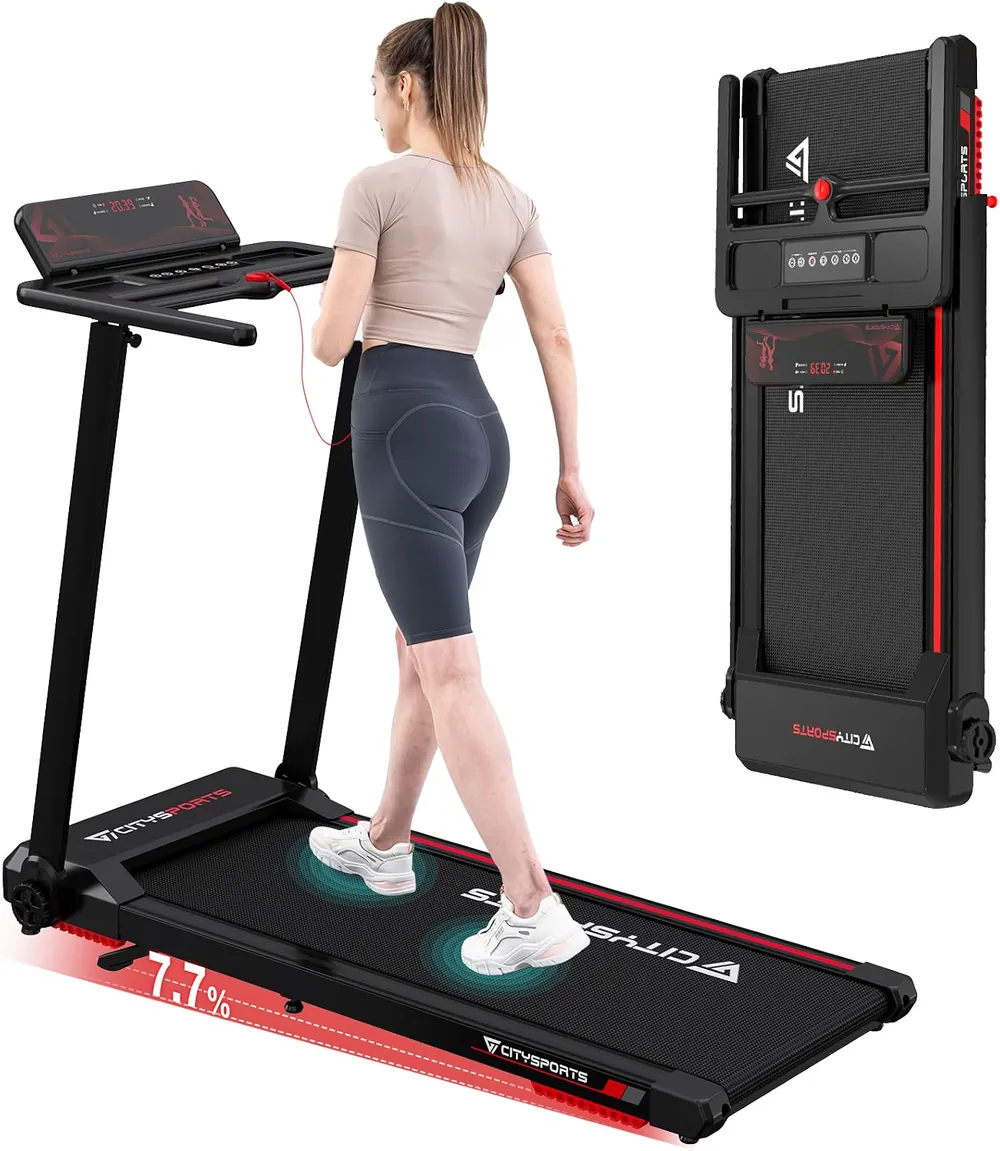
Up to 12 km/h, 3-6-9 shortcuts, a 400 x 1020 mm belt and a folding handrail: enough to walk every day and jog, then slide the treadmill under furniture.
- 12 km/h
- 400 x 1020 mm
- 26.5 kg
Walking or running to lose weight?
For the same duration, running burns clearly more than walking. But that is not the question. The real question is: how much time can you keep up, every week, for months?
- Walking is accessible to almost everyone, low-impact, sustainable for long periods, and compatible with other activities (phone, series, reading). You can do it every day.
- Running burns more per minute, but requires a progression, puts more stress on the joints and leaves less room for recovery for a beginner.
For someone starting from little, five hours of walking a week is more realistic than two hours of running, and burns more in total. For someone already active, mixing the two is ideal: walking for volume, running or intervals for fitness.
Uphill walking, the quiet weapon
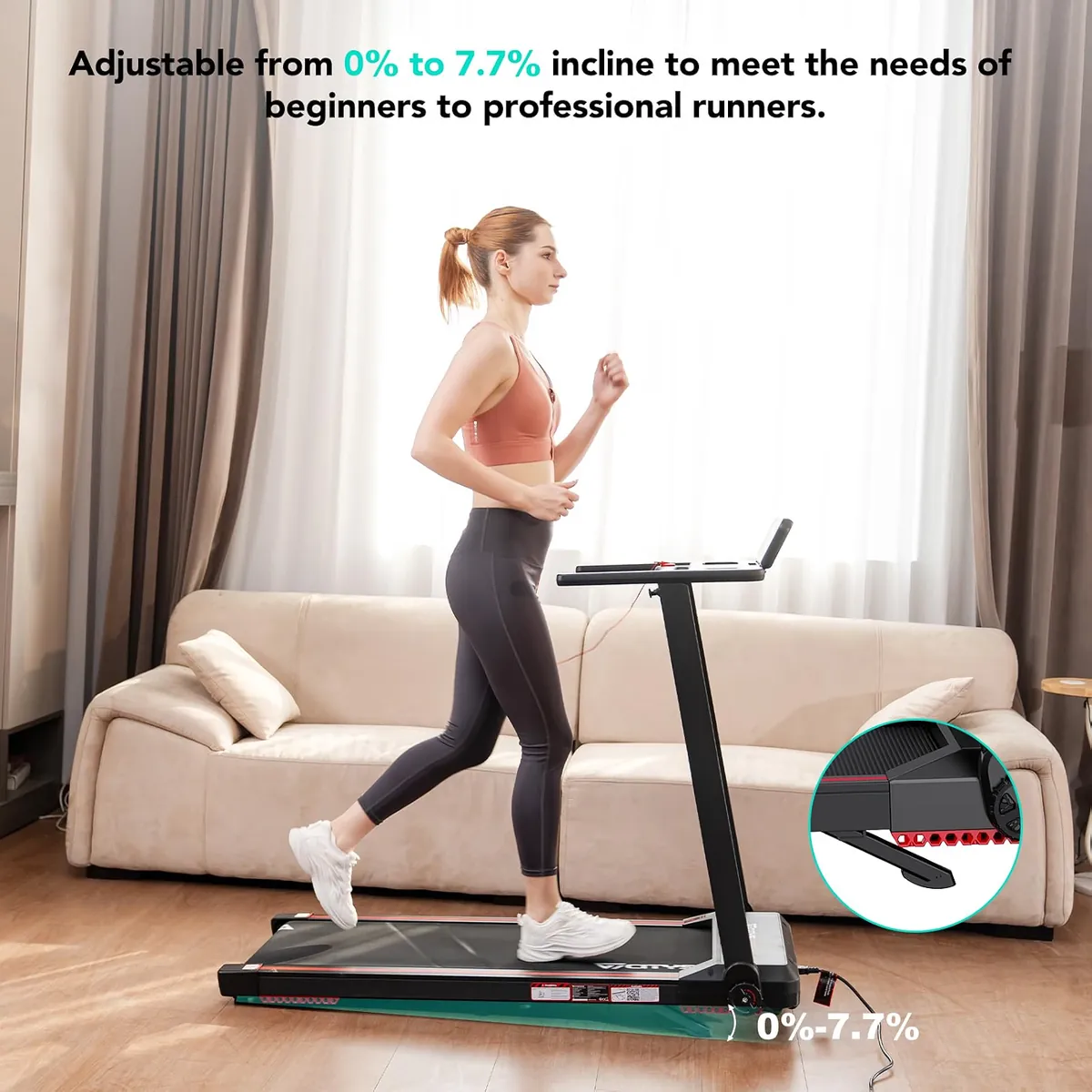
Walking uphill increases expenditure without increasing impact on the ground. It is an excellent compromise for people who are overweight and want to burn more without the stresses of running. On the CITYSPORTS treadmill, the incline is manual, up to 7.7 %, and set with the treadmill stopped.
The 2024 Compendium publishes no MET value for uphill treadmill walking at these speeds, and we will not invent a coefficient. Remember the principle: at the same speed, the incline noticeably raises the effort, which you will feel on the talk test. Start with 15 minutes uphill at 3 or 4 km/h, without holding the handrail, and lengthen gradually.
Weekly volume, the key to results
The WHO recommends that adults do 150 to 300 minutes of moderate activity a week for general health. To lose weight and keep it off, many people need to aim for the top of that range, or beyond, combining activity and diet.
In practice, here is what a few typical weeks represent for a 75 kg person:
| Typical week | Volume | Estimated gross expenditure |
|---|---|---|
| 3 x 30 min active walking (3.8 MET) | 90 min | about 430 kcal |
| 5 x 30 min active walking | 150 min | about 710 kcal |
| 5 x 45 min brisk walking (4.8 MET) | 225 min | about 1,350 kcal |
| 5 x 60 min brisk walking | 300 min | about 1,800 kcal |
You can see the value of increasing volume rather than intensity: going from three 30-minute sessions to five one-hour sessions multiplies expenditure by four, without ever running.
Adding steps without thinking
Time spent sitting is a second lever, separate from sessions. In 2025 the French health agency Anses noted that French adults spend an average of seven hours a day sitting, and now recommends breaking up sitting every 30 minutes with 3 to 5 minutes of walking. With a treadmill in the room, that recommendation becomes easy to follow:
- 3 to 5 minutes of walking at 3 or 4 km/h every half hour when working from home;
- walking during phone calls;
- a slow walk during an episode of a series instead of the sofa.
Ten 5-minute breaks at 3.5 km/h add up to nearly 3 km and 50 minutes of walking in the day, without a “workout”. A meta-analysis published in 2022 in The Lancet Public Health links a higher step count to lower mortality, up to about 8,000 to 10,000 steps a day before 60. Our article walking pad under the desk details how to organise it.
The trap of displayed calories
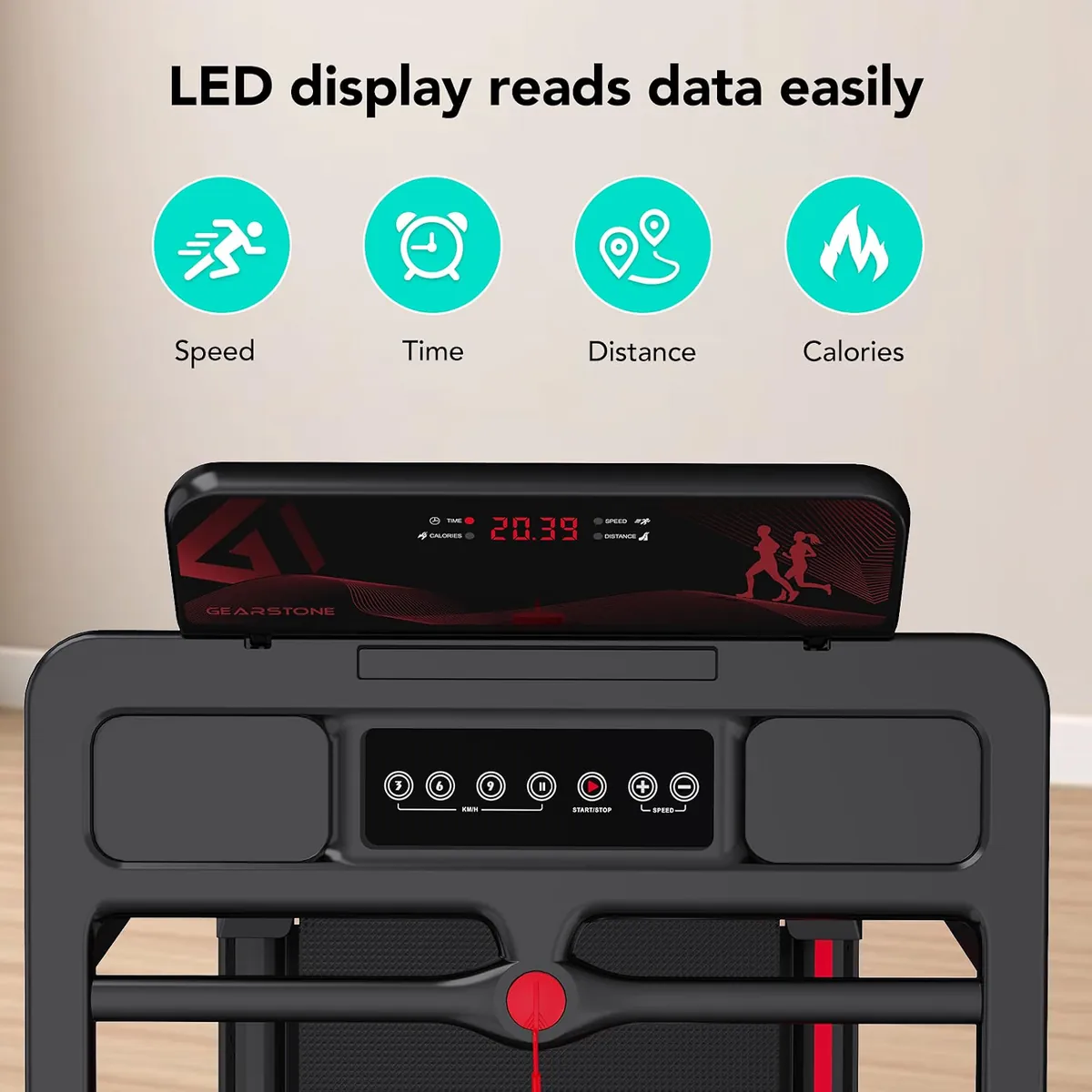
The treadmill console shows calories, often calculated without your weight. They can be greatly overestimated or underestimated. The trap is psychological: seeing “300 kcal” after a session gives the impression of having “earned” a dessert. Yet an expenditure of 150 to 200 kcal is quickly cancelled out by a snack.
Use the console’s calories as an indicator of progress from one session to the next, not as a precise count. And do not “eat back” your sessions: the reward for activity lies elsewhere, in energy, sleep and fitness.
Diet and compensation
Without dietary adjustment, activity alone rarely leads to much weight loss. Two phenomena explain this:
- Dietary compensation: activity increases appetite, and you eat a little more without noticing.
- Activity compensation: after a session, you sometimes move less for the rest of the day.
A few simple principles, without a strict diet: favour minimally processed foods, vegetables and protein at every meal; drink water rather than sugary drinks; avoid snacking in front of screens. For personalised support, a doctor or dietitian remains the best person to ask.
Keeping your muscles
When you lose weight, you lose fat but also some muscle. Strength training limits that loss, protects the joints and helps you keep a good shape. The WHO recommends it on at least two days a week.
After a treadmill session, add fifteen to twenty minutes on the floor: squats, lunges, glute bridges, plank, wall or floor press-ups. No equipment needed. Do not do these exercises on the treadmill belt, even when it is stopped.
Sleep, stress and recovery
Too little sleep increases hunger and makes effort harder. A moderate walking session at the end of the day often helps you sleep better. Avoid very intense sessions just before bed, though, if they keep you awake.
Plan at least one rest day a week if you run, and alternate intensities. Accumulated fatigue is the number one reason for giving up.
A 12-week plan
For someone starting from little who wants to lose weight for good. Speeds are a guide: adjust them with the talk test.
| Weeks | Sessions | Content | Volume |
|---|---|---|---|
| 1 and 2 | 4 | Walking at 4 to 4.5 km/h, 20 min | 80 min |
| 3 and 4 | 5 | Active walking at 5 km/h, 25 min; one 15-min uphill session | about 115 min |
| 5 and 6 | 5 | Active walking 30 min; two 20-min uphill sessions | about 130 min |
| 7 and 8 | 5 | Brisk walking 35 to 40 min; two 25-min uphill sessions | about 165 min |
| 9 and 10 | 5 to 6 | Brisk walking 40 to 45 min; one walk-run session if you feel like it | about 220 min |
| 11 and 12 | 6 | Brisk walking 45 to 50 min; two uphill sessions; one walk-run session | about 270 min |
Add two strength sessions a week from week 3, and the Anses active breaks on home-working days. If you want to move on to running, follow our walking-to-jogging plan.
Measuring your progress
The scales are not the only indicator, nor the best in the short term: weight varies by about a kilo either way from day to day depending on water and meals. Track instead:
- Waist measurement, once a month, at the same time of day;
- Weight, once a week, on the same day, on waking;
- Weekly volume of walking and running;
- The walking speed at which you stay in the moderate zone: if it rises, your fitness is improving;
- How you feel: stairs, sleep, energy.
If you are very overweight
The treadmill is often a good starting point, because walking is low-impact. Three points to watch:
- Maximum load: it must exceed your weight with a margin. On the CITYSPORTS treadmill, the description states 120 kg and the specification table 110 kg; use the lower value.
- Uphill walking rather than running to increase effort without multiplying impacts.
- The handrail for stepping on and off, and a doctor’s advice before you start.
For people above a compact treadmill’s maximum load, a sturdier machine, or a high-capacity exercise bike, will be better suited.
Small habits that add up
Results rarely come from one big change. They come from a handful of small habits repeated for months. A few that work well with a treadmill at home:
- Walk while you watch: one episode of a series on the treadmill rather than on the sofa.
- Walk during calls, especially long personal calls.
- Set a daily minimum, for example 20 minutes, and allow yourself to stop there on busy days.
- Prepare your shoes and water the night before a morning session.
- Keep a simple log of minutes walked per week, rather than calories.
Each habit seems minor, but together they can add several hours of walking a week without a feeling of effort.
Frequently asked questions
How many kilos can you lose with a treadmill?
It depends mainly on diet, activity volume and consistency. The treadmill helps you burn more, every week, for months; it does not set a result on its own.
Is it better to walk for a long time or run fast?
For most beginners, walking long and often is more effective, because it is easier to keep up. Running comes later.
Should you walk on an empty stomach?
It is not necessary. What counts is total expenditure over the week and your overall diet.
How long per day?
Aim for at least 30 minutes of moderate walking five days a week, then lengthen towards 45 to 60 minutes if possible.
Are the console calories reliable?
Rarely, because they often ignore your weight. Treat them as an indicator of progress, not an exact count.
Does the incline help you lose more weight?
It increases expenditure at the same speed, without extra impact. It is a good tool for progressing without running.
Can you lose weight just by walking under your desk?
Slow walking at the desk adds expenditure and reduces sitting time, but to lose weight you usually need to add more vigorous sessions and a suitable diet.
Is it better to train in the morning or the evening to lose weight?
What matters is the time you can keep to regularly. Choose the slot that fits your schedule and your sleep.
Your next kilometre starts here.
12 km/h · 1400 W · 400 x 1020 mm belt · Bluetooth · No assembly. The price changes often on Amazon: check it, along with the seller and the stated maximum load, before ordering.
Check the price on AmazonAffiliate link · new tab